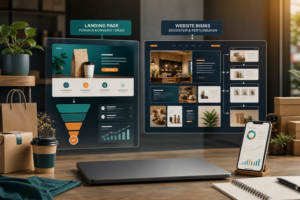


For many SMEs in Singapore and Malaysia, your website is no longer judged first on a laptop. It is judged on a phone, often while your customer is commuting, comparing vendors during lunch, or checking options after seeing your brand on social media.
Across Southeast Asia, mobile usage shapes how people search, browse, and buy. If your website looks fine on desktop but feels slow or confusing on mobile, you may lose leads before visitors understand what you offer. That is why mobile-first web design is not just a design trend. It is a practical growth decision for SMEs in Singapore, Malaysian businesses, and brands serving the SEA market.
What Mobile-First Web Design Really Means
Mobile-first design means planning the website experience for smaller screens before expanding it for desktop. Instead of squeezing a desktop layout into a phone, you start with the essentials: clear messaging, fast loading, simple navigation, and easy calls to action.
This approach matters because mobile visitors behave differently. They scan quickly, tap instead of click, and expect information without effort. A mobile-first website focuses on what your customer needs most:
- What your business does
- Why they should trust you
- How much value you can provide
- How to contact you, book, buy, or request a quote
For SMEs competing in Singapore, Kuala Lumpur, Johor Bahru, Penang, or Selangor, this clarity can make the difference between a lead and a bounce.
Why Mobile Matters in Singapore and Malaysia
Singapore and Malaysia are highly connected markets with strong smartphone adoption. Customers commonly discover businesses through Google Search, Google Maps, Instagram, TikTok, WhatsApp, and online directories. In many cases, the first visit to your website happens on mobile.
That means your mobile site has to work hard from the first second. A restaurant in Singapore, a renovation contractor in Malaysia, a B2B software provider, or a clinic targeting local searches all face the same challenge: visitors want quick answers and a smooth path to action.
If your site loads slowly or requires constant zooming, users may assume your business is outdated, even if your actual service is excellent. In competitive SEA markets, perception becomes part of conversion. A polished mobile experience signals that your business is professional, responsive, and customer-focused.
Mobile-First Design Supports Local SEO
Google uses mobile-first indexing, which means it primarily considers the mobile version of your website when evaluating pages. For SMEs in Singapore and Malaysia that depend on search visibility, this has a direct impact on SEO performance.
A mobile-first website can support local SEO by improving:
- Page speed: Faster mobile pages reduce abandonment and create a better user experience.
- Content readability: Clear headings and short paragraphs help users and search engines understand your page.
- Navigation: Simple menus make it easier for visitors to find service pages, locations, and contact details.
- Conversion signals: Click-to-call buttons, WhatsApp links, and forms help turn search traffic into enquiries.
For example, a Malaysian accounting firm targeting “SME accounting services in KL” or a Singapore interior design studio targeting “commercial renovation Singapore” needs more than keywords.
Design for Thumb-Friendly Conversions
Mobile-first design is not only about fitting content into a smaller screen. It is about designing for how people physically use their phones. Buttons need to be large enough to tap. Forms should be short. Important actions should appear where users naturally expect them.
For business websites, this often means placing high-intent actions near the top and repeating them at relevant points. Useful mobile conversion elements include:
- Sticky “Call” or “WhatsApp” buttons
- Short enquiry forms with only essential fields
- Clear service cards with pricing cues or package summaries
- Trust markers such as testimonials, client logos, certifications, or case studies
- Location details for Singapore or Malaysia branches
The goal is to reduce friction. If someone is ready to ask for a quote, do not make them hunt for your contact page. If they are still comparing options, give them proof that your business understands their problem.
Speed Is a Business Metric
Many SMEs treat website speed as a developer issue, but it directly affects revenue. A slow mobile website can increase bounce rates, reduce ad performance, and make SEO harder. This is especially important if you run Google Ads or social media campaigns, because paid clicks become more expensive when the landing page performs poorly.
Practical speed improvements include compressing images, using modern image formats, reducing unnecessary scripts, choosing reliable hosting, and avoiding heavy animations that do not support the customer journey. A good website should feel smooth even on mobile data, not only on office Wi-Fi.
If you are already investing in digital marketing, your website should protect that investment. You can read more about why mobile experience matters in Moncer Studio’s article on why mobile-friendly websites are now essential.
How SMEs Can Start Improving Mobile Performance
You do not always need a full redesign immediately. Start by reviewing your highest-value pages: homepage, service pages, landing pages, contact page, and any pages receiving paid traffic. Open them on a phone and ask a few simple questions.
- Can visitors understand your offer within five seconds?
- Is the text easy to read without zooming?
- Are buttons and forms easy to use with one hand?
- Does the page load quickly on mobile data?
- Is there a clear next step for leads in Singapore or Malaysia?
These checks reveal many hidden problems. A desktop hero section may push the call to action too far down on mobile. A long form may discourage users who only want a quick quotation.
Conclusion
Mobile-first web design helps SMEs in Singapore and Malaysia create websites that are faster, clearer, and better aligned with how customers browse today. When your mobile experience supports trust, SEO, and conversion, your website becomes more than an online brochure; it becomes a stronger business asset. If your current site is not turning mobile visitors into enquiries, Moncer Studio can help you plan a practical redesign that fits your market, goals, and growth stage.